
Bathroom silicone sealant plays an important role in preventing water from entering gaps around baths, showers, basins and other bathroom fittings.
Bathroom silicone sealant plays an important role in preventing water from entering gaps around baths, showers, basins and other bathroom fittings.
However, silicone does not last forever.
Over time, it can become discoloured, mouldy, cracked or detached from the surface.
If you notice water escaping around a shower or bath, damaged sealant may be one possible cause.
This guide explains when bathroom silicone needs replacing and how to prevent recurring problems.
Why Does Bathroom Silicone Become Mouldy?
Bathrooms are frequently exposed to moisture and warm temperatures.
Common causes of mould and deterioration include:
- Poor ventilation.
- Persistent moisture.
- Inadequate cleaning and drying.
- Ageing silicone.
- Damaged or poorly applied sealant.
- Water collecting around joints.
Mould can develop on the surface or behind damaged sealant where moisture becomes trapped.
Signs That Bathroom Silicone Needs Replacing
Look for:
- Black mould spots.
- Cracked silicone.
- Peeling or detached edges.
- Gaps between the sealant and surface.
- Persistent dampness.
- Water escaping around joints.
- Discoloured or deteriorating material.
Simply applying another layer over damaged silicone is not usually a reliable long-term solution.
When Should You Replace Bathroom Silicone?
Replacement may be necessary when:
- The sealant has detached.
- Cracks or gaps are visible.
- Mould has penetrated the sealant.
- Water is passing through the joint.
- Previous repairs have failed.
The surrounding surfaces should also be checked for signs of water damage.
What Is Involved in Replacing Bathroom Silicone?
A proper replacement normally involves:
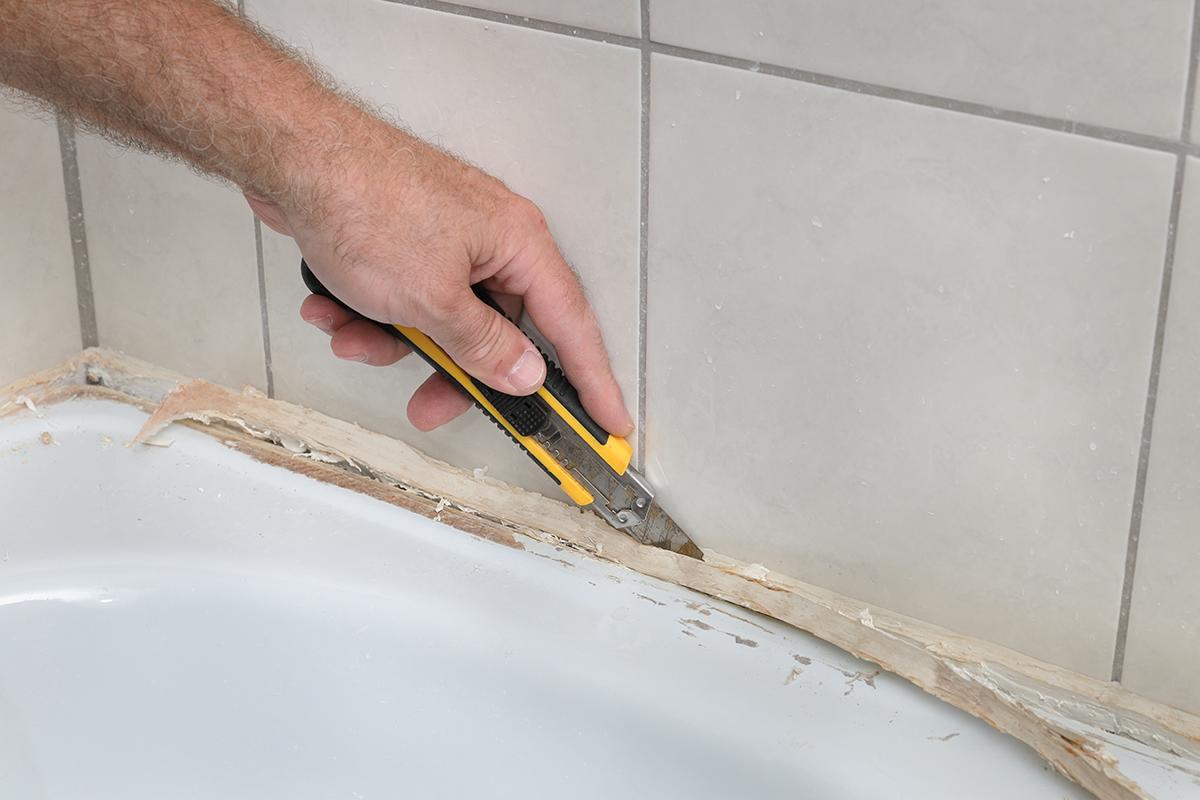
1. Removing the old sealant
The existing silicone needs to be removed carefully without damaging surrounding surfaces.
2. Cleaning the joint
Old residue, dirt and surface contamination should be removed using suitable methods.
3. Drying the area
The joint must be appropriately dry before new sealant is applied.
4. Applying suitable silicone
The sealant must be compatible with the surfaces and intended bathroom use.
5. Finishing the joint
The new bead should be applied and finished consistently.
6. Allowing curing time
Follow the manufacturer's instructions before exposing the new sealant to water.
How to Prevent Bathroom Silicone Mould
- Use an extractor fan.
- Improve bathroom ventilation.
- Wipe excess water from surfaces.
- Clean joints regularly with suitable products.
- Repair damaged sealant early.
- Allow the bathroom to dry between uses.
Can You Apply New Silicone Over Old Silicone?
In most cases, removing the old sealant is the better approach.
New silicone may not adhere reliably to old silicone, particularly if it is contaminated or deteriorating.
Frequently Asked Questions
Can mouldy bathroom silicone be cleaned?
Surface mould may sometimes be reduced with suitable cleaning products, but silicone that is deeply contaminated or damaged may need replacing.
Why does silicone peel away from my shower tray?
Possible causes include poor adhesion, movement, contamination, moisture during application or deterioration over time.
How long does bathroom silicone take to cure?
Curing time depends on the product and conditions. Always follow the manufacturer's instructions before using the shower or bath.
Can leaking shower silicone cause water damage?
Yes. Water entering joints can damage surrounding materials and may contribute to damp problems.
Should I replace silicone around my bath?
If it is cracked, detached, mouldy or no longer sealing correctly, replacement should be considered.
Conclusion
Bathroom silicone should not be ignored when it becomes cracked, mouldy or detached. Replacing damaged sealant and improving ventilation can help protect surrounding surfaces and reduce the risk of water ingress.
BuilderFix Refurb can discuss suitable bathroom maintenance, silicone replacement and home improvement work in London.
Related Services