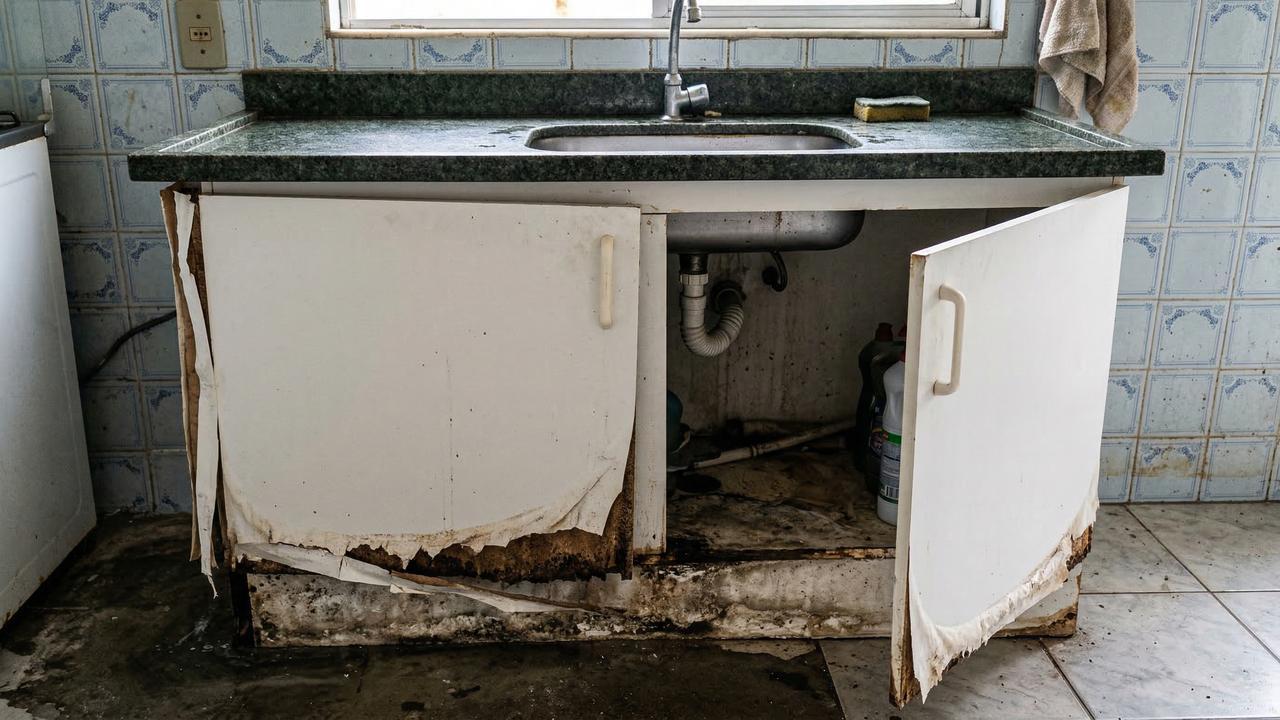
Water damage is one of the most common reasons kitchen cabinets deteriorate. It often starts underneath the kitchen sink, around a dishwasher or near a washing machine.
Water damage is one of the most common reasons kitchen cabinets deteriorate. It often starts underneath the kitchen sink, around a dishwasher or near a washing machine.
At first, you may notice a small stain or slightly swollen edge. Over time, the material can expand, lose strength and become difficult to repair.
The important thing is to identify the source of the water before deciding what to replace.
What Causes Water Damage to Kitchen Cabinets?
Typical causes include:
- Leaking sink waste pipes.
- Loose plumbing connections.
- Damaged tap seals.
- Dishwasher leaks.
- Washing machine leaks.
- Water spilling around cabinet edges.
- Condensation and persistent moisture.
How to Recognise Water-Damaged Kitchen Units
Look for these warning signs:
- Swollen cabinet bases.
- Peeling laminate or edging.
- Soft or crumbly chipboard.
- Dark water stains.
- Musty smells.
- Loose cabinet joints.
- Warped shelves or doors.
If the material is soft or breaking apart, it may no longer provide reliable support.
Can Water-Damaged Kitchen Cabinets Be Repaired?
The answer depends on the material and the extent of the damage.
Minor surface damage
If the damage is cosmetic and the underlying material remains firm, cleaning, preparation and refinishing may be possible.
Damaged cabinet base
If a cabinet base has swollen, it may need partial replacement or reconstruction, depending on the design and structural condition.
Severe water damage
If the cabinet has lost its strength or the damage extends to important structural connections, replacing the affected unit may be the safer option.
What Should You Do Before Repairing the Cabinet?
- Identify the source of the water.
- Stop the leak or arrange for the plumbing problem to be fixed.
- Remove stored items from the affected cabinet.
- Allow the area to dry appropriately.
- Assess the condition of the cabinet material.
- Decide whether repair or replacement is practical.
Do not cover wet or deteriorating material with a new panel. This can hide the underlying problem.
How to Prevent Future Water Damage
- Check sink plumbing connections regularly.
- Repair leaks promptly.
- Use suitable seals around vulnerable areas.
- Wipe up water immediately.
- Keep the area underneath the sink ventilated.
- Inspect cabinet edges and joints.
Frequently Asked Questions
Can a water-damaged kitchen cabinet be saved?
Sometimes. Minor damage may be repairable, while severely swollen or weakened material may need replacing.
Can I replace only the bottom of a kitchen cupboard?
In some cabinet designs, a damaged base panel can be replaced without changing the entire kitchen. The construction and surrounding units must be assessed first.
Why is the cabinet under my sink swelling?
A plumbing leak, water spills or moisture entering exposed edges are common causes.
Does water-damaged chipboard dry out and become strong again?
No. Drying removes moisture, but it does not reliably restore the original strength of chipboard that has swollen and broken down.
Should I replace all my kitchen cabinets after a leak?
Not necessarily. The damage may be limited to one or two units.
Conclusion
Water-damaged kitchen cupboards should be assessed early. Fixing the source of moisture and choosing the right repair can help prevent unnecessary replacement costs.
Contact BuilderFix Refurb to discuss damaged kitchen units and refurbishment options in London.
Related Services