Swollen MDF kitchen doors are a common problem, particularly in kitchens where moisture and steam are present. Understanding the cause of the swelling is the first step towards choosing the right repair.
Have your kitchen cupboard doors started swelling around the edges? Are they becoming difficult to close, or does the surface look raised and uneven?
Swollen MDF kitchen doors are a common problem, particularly in kitchens where moisture and steam are present. Although some minor surface damage can be treated, MDF that has absorbed significant water is often difficult to restore to its original condition.
Understanding the cause of the swelling is the first step towards choosing the right repair.
Why Does MDF Swell?
MDF stands for Medium Density Fibreboard. It is made from compressed wood fibres and resin.
It is commonly used for kitchen cupboard doors because it provides a smooth surface for decorative finishes.
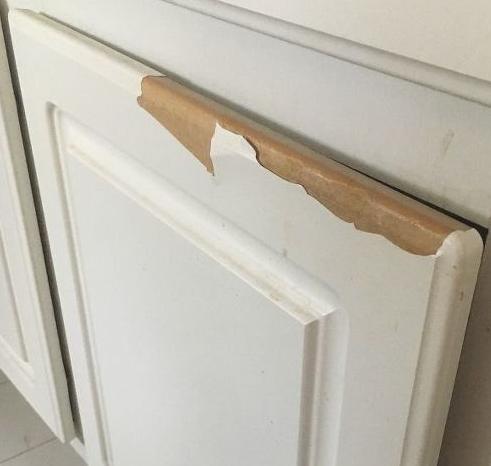
However, MDF is vulnerable to moisture, particularly when its protective finish or edges are damaged.
Typical causes include:
- Water leaking from a sink or plumbing connection.
- Steam from cooking and dishwashing.
- Water entering damaged edges.
- Poorly sealed cut-outs or exposed surfaces.
- Long-term condensation.
Can Swollen MDF Be Repaired?
It depends on how badly the material has been affected.
Minor swelling
If the damage is limited to a small area, the affected surface may sometimes be prepared and refinished. The material must be completely dry and sufficiently stable.
Moderate swelling
If the edges have expanded or become uneven, sanding and filling may improve the appearance, but it may not restore the original strength or dimensions.
Severe swelling
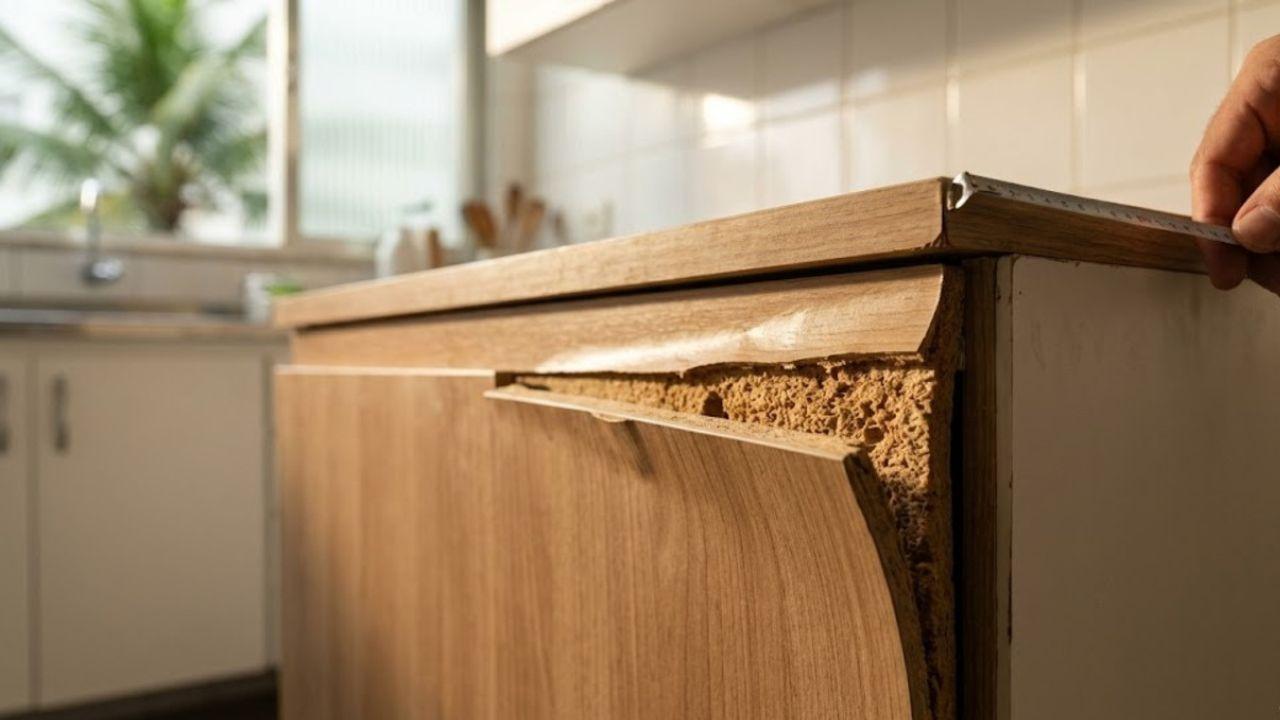
If the door has become soft, distorted, crumbly or significantly enlarged, replacement is generally the more dependable solution.
How Is a Swollen MDF Door Assessed?
A proper assessment should consider:
- The extent of the swelling.
- Whether the door is still structurally sound.
- Whether moisture is still entering the material.
- The condition of the laminate, paint or vinyl finish.
- Whether matching replacement doors are available.
Do not simply cover swollen MDF with paint. The underlying problem needs to be addressed first.
How to Prevent MDF Kitchen Doors From Swelling
- Repair plumbing leaks immediately.
- Keep cupboard edges and joints properly protected.
- Use an extractor fan to reduce steam.
- Avoid leaving wet cloths against cupboard doors.
- Dry spills around sink units promptly.
- Replace damaged seals where necessary.
Frequently Asked Questions
Can swollen MDF return to its original size?
Once MDF has absorbed water and expanded, it generally does not return perfectly to its original dimensions simply by drying.
Can I sand swollen MDF?
Light sanding may help with minor surface irregularities, but heavily swollen or weakened material cannot reliably be restored through sanding.
Can swollen kitchen doors be painted?
Only if the substrate is dry, stable and suitable for preparation. Painting over active moisture damage is not a proper repair.
Should I replace one door or the whole kitchen?
If the cabinet units are sound, replacing only the damaged doors may be a practical option.
Why is my cupboard swollen under the kitchen sink?
Possible causes include leaking pipework, condensation, water spills and damaged cabinet edges.
Conclusion
Swollen MDF kitchen doors need careful assessment. Minor cosmetic damage may be repairable, but significant water damage often makes replacement the better long-term choice.
BuilderFix Refurb can discuss kitchen cabinet repair and refurbishment options in London. Send photographs of the affected area so the required work can be assessed.
Related Services