Kitchen cupboard shelves carry considerable weight from plates, glasses, food containers and cookware. Over time, shelves can begin to sag, become loose or even break.
Kitchen cupboard shelves carry considerable weight from plates, glasses, food containers and cookware.
Over time, shelves can begin to sag, become loose or even break.
The problem is particularly common in older kitchens where shelves have been overloaded or the support fittings have deteriorated.
Fortunately, many shelf problems can be addressed without replacing the complete kitchen cabinet.
Why Do Kitchen Cabinet Shelves Sag?
Common causes include:
- Excessive weight.
- Long unsupported shelf spans.
- Weak or damaged shelf material.
- Broken shelf supports.
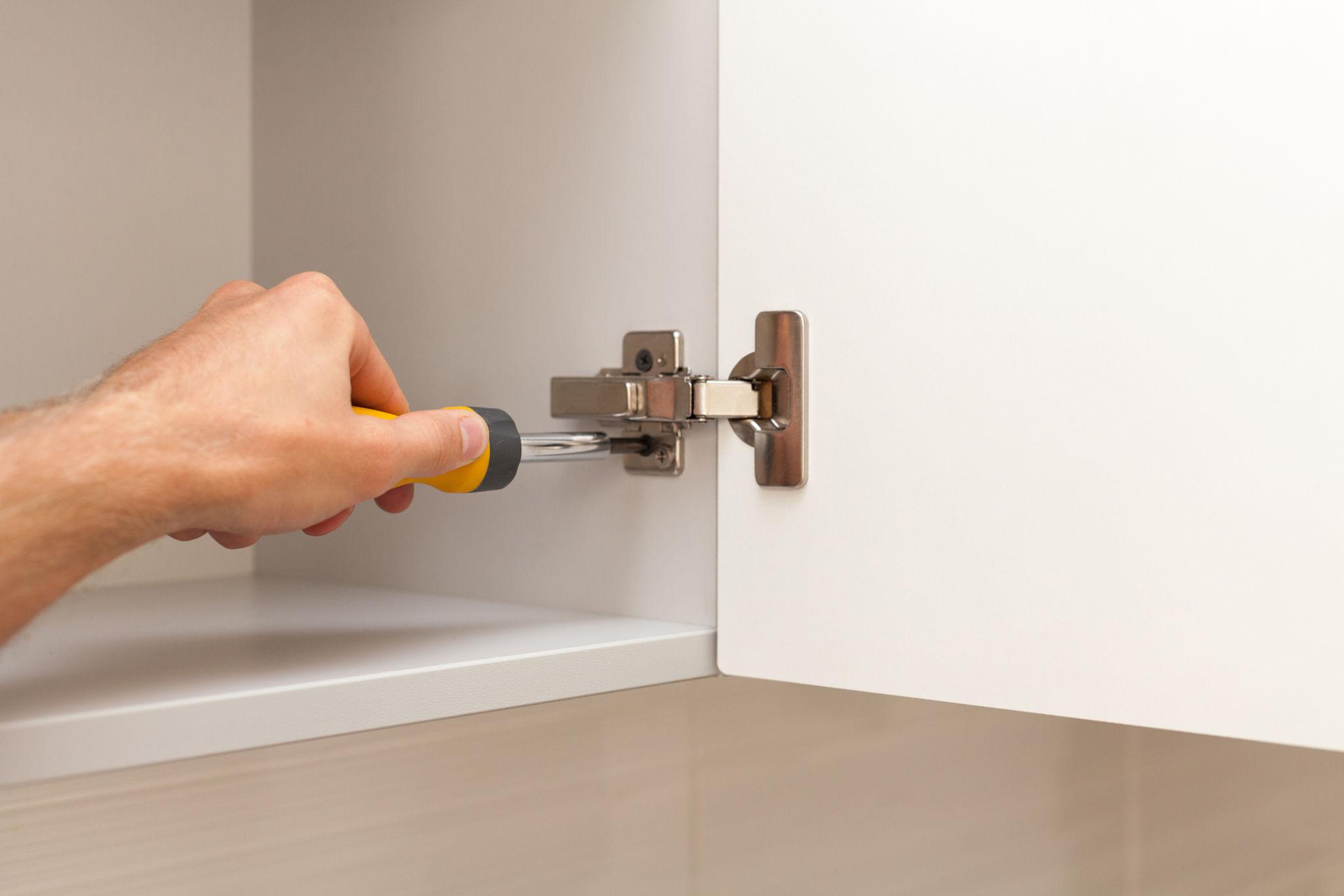
- Loose fixing points.
- Moisture damage.
- Incorrect installation.
How to Identify the Problem
Check whether:
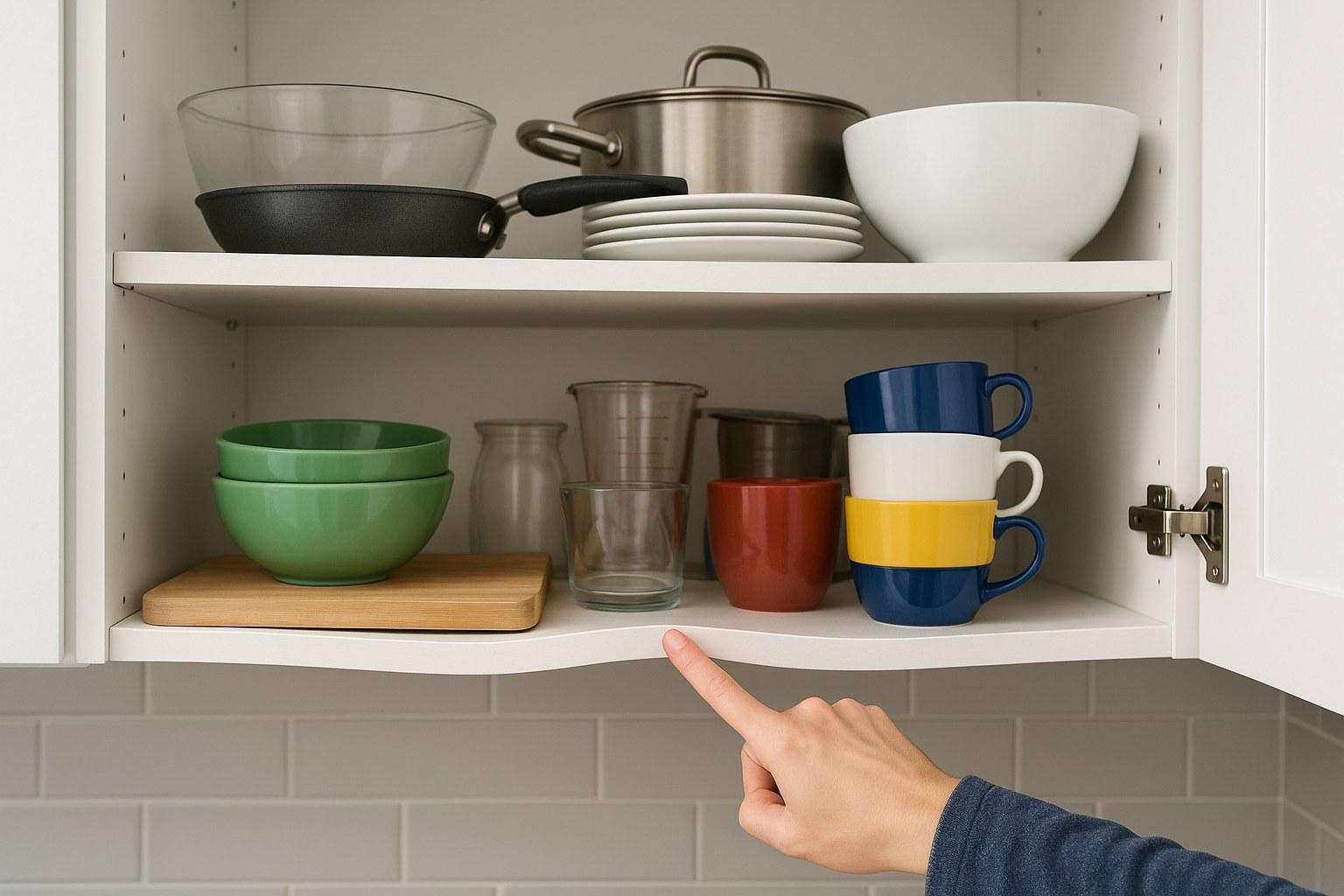
- The shelf is visibly bending.
- One side has dropped.
- Shelf support pins are missing.
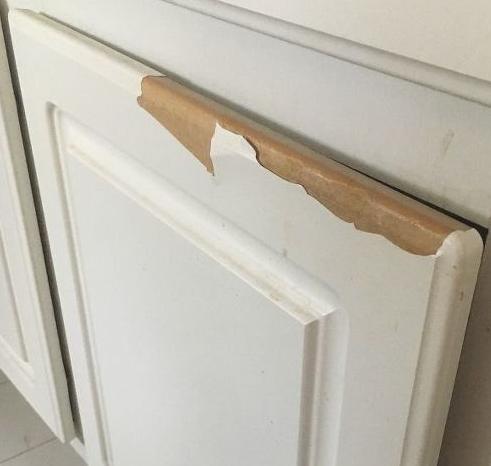
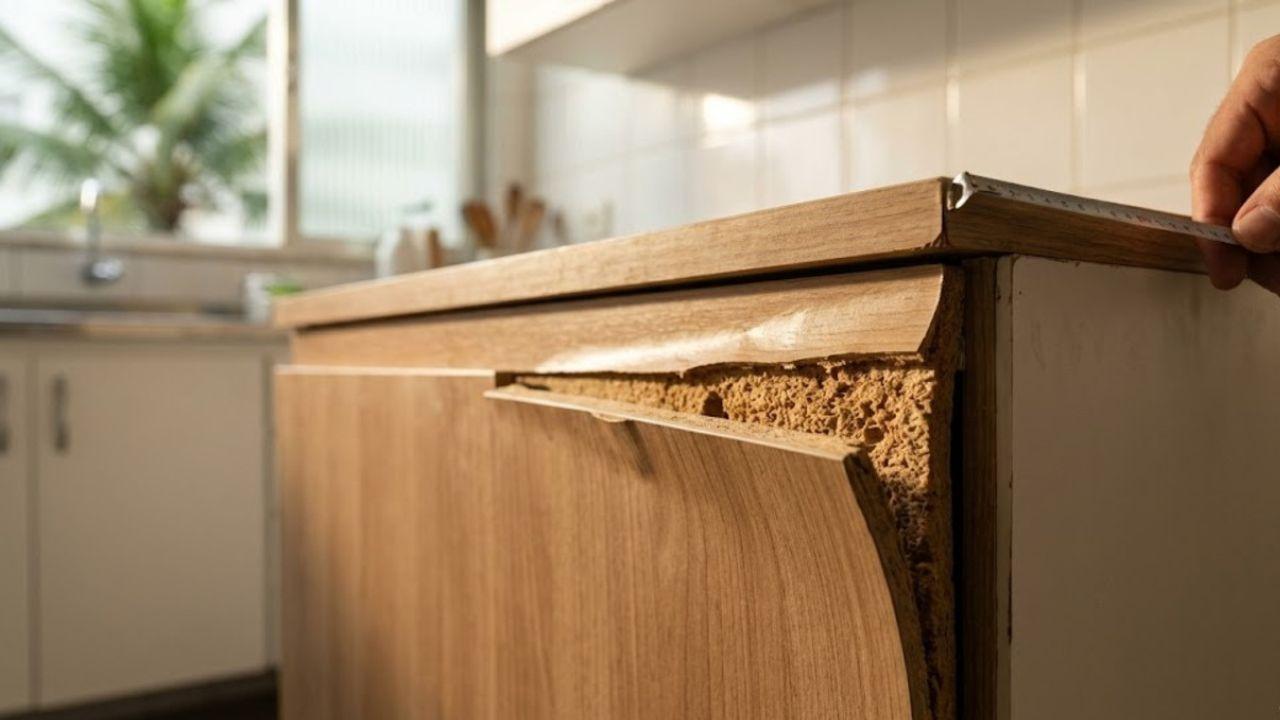
- The shelf material is cracked.
- The cabinet side panels are damaged.
- The shelf has swollen due to moisture.
It is important to distinguish between a damaged shelf and a damaged cabinet structure.
How Can a Sagging Kitchen Shelf Be Repaired?
1. Remove excessive weight
Take items off the shelf before inspecting it.
2. Check the shelf supports
Inspect the small support pins, brackets or other fittings.
Replace damaged supports with compatible components.
3. Assess the shelf material
A slightly damaged shelf may be suitable for reinforcement, depending on its construction.
A severely bent or broken shelf is generally better replaced.
4. Replace the shelf
Measure the internal cabinet width, depth and required thickness.
The replacement should fit correctly and use suitable materials.
5. Improve the support system
For heavier loads, additional support may be required. The solution should be suitable for the cabinet construction.
Can a Sagging Chipboard Shelf Be Straightened?
Not reliably in every situation.
If chipboard has permanently deformed or become weakened, replacing it may be more effective than trying to straighten it.
How to Prevent Kitchen Shelves From Breaking
- Distribute weight evenly.
- Avoid overloading shelves.
- Use suitable support fittings.
- Check shelves periodically.
- Keep moisture away from exposed edges.
- Replace damaged supports promptly.
Frequently Asked Questions
Why is my kitchen cupboard shelf bending?
Excessive weight, long unsupported spans and weak shelf materials are common causes.
Can I reinforce a sagging kitchen shelf?
In some situations, yes. However, a severely deformed or damaged shelf may need replacing.
Are kitchen shelf support pins universal?
No. Different cabinets use different support sizes and fitting arrangements.
Can I replace one kitchen cupboard shelf?
Yes, if the dimensions and material requirements can be matched.
How much weight can a kitchen cabinet shelf hold?
This depends on the shelf material, thickness, span, support system and cabinet construction. Always follow the manufacturer's specifications where available.
Conclusion
Sagging or broken kitchen shelves can make cupboards difficult and unsafe to use. Identifying the cause and choosing suitable replacement or reinforcement can restore their usability.
Contact BuilderFix Refurb to discuss kitchen cabinet repairs and refurbishment in London.
Related Services